Loss of the neck's natural curve
Your neck is built with a gentle C-shaped curve that acts as a shock absorber. When it straightens or reverses, the whole system loses its cushioning.
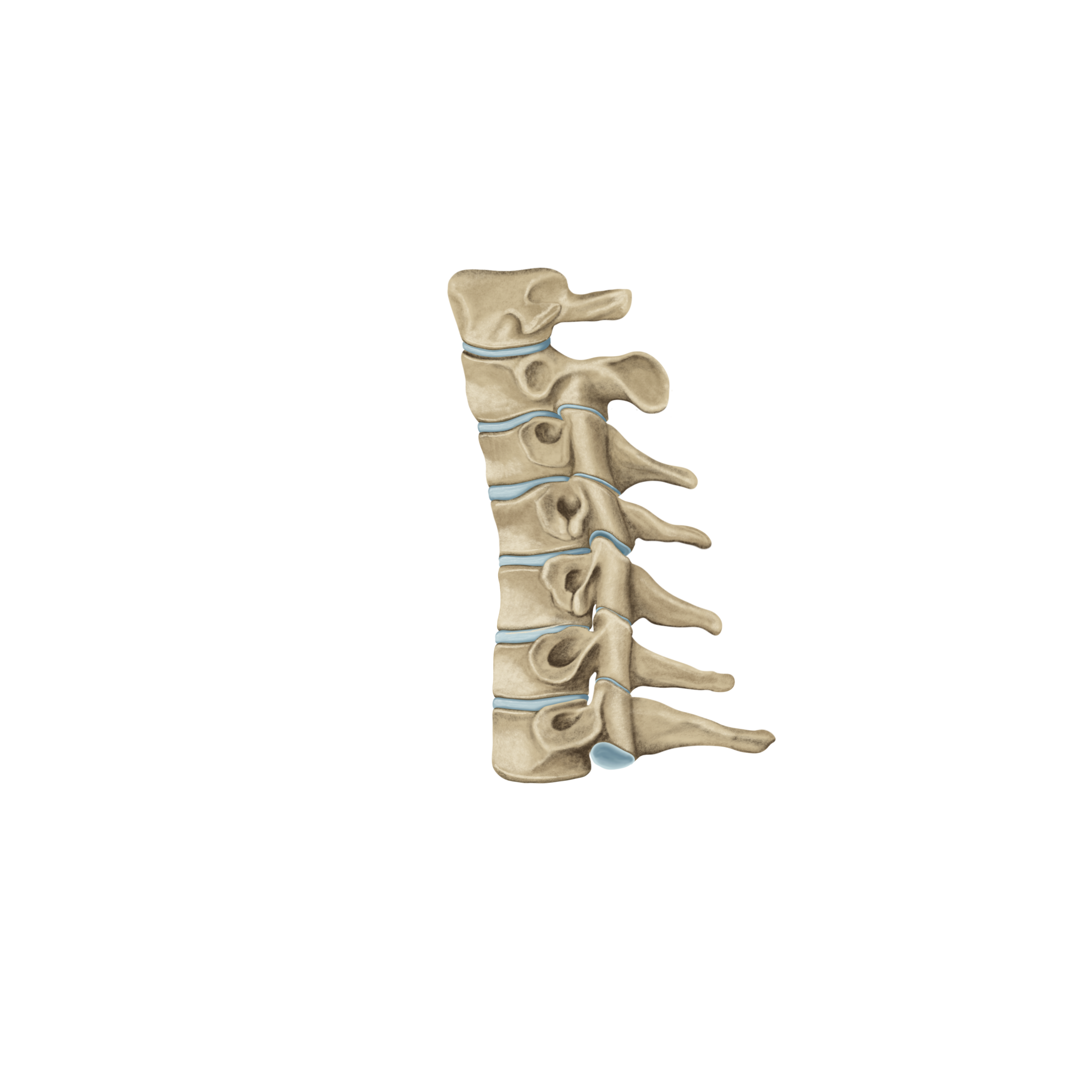
Illustration for education. Proprietary DMXRays anatomy — clinician-reviewed set in progress.
What we're looking at
A healthy neck curves gently forward (lordosis). This curve isn't cosmetic — it spreads load evenly and absorbs shock. When that curve flattens (straightening) or bends the wrong way (reversal), the neck loses its built-in suspension, and forces that used to be cushioned now land directly on joints, discs, and ligaments.
Why it makes everything else worse
Without the curve, movement gets less coordinated and individual levels get overloaded. It often travels together with the other findings on this site — a straightened curve makes hypermobility, disc wear, and even whiplash injuries more likely and more severe, because there's no give left in the system.
The good news
Curve is something that can often be worked on — and because we can measure it precisely, progress is something you can actually see, not just feel.
Symptoms it can cause
This is exactly what a Digital Motion X-Ray reveals.
A still X-ray is one frozen moment. DMX films your neck moving — so the affected level shows itself. Ask your provider about a Digital Motion X-Ray, or find a clinic that uses DMXRays.
Related
Educational and informational only — not medical advice or a diagnosis. Imaging must be interpreted by a licensed clinician. Powered by doctorhutcheson.com.